September 2, 2026 · 6 min read
How to fix AI writing that sounds too perfect
AI writing doesn't just sound formal. It sounds too perfect. Every sentence lands exactly where it should. That perfection is what makes it feel fake, and September detector builds score it higher.
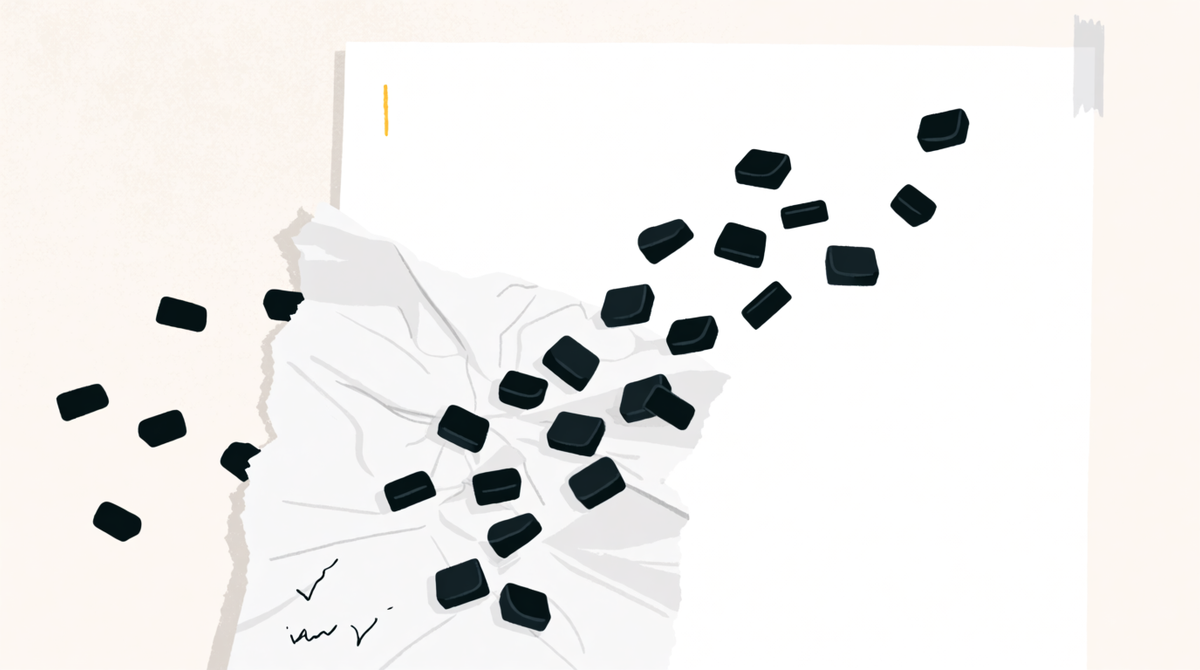
Most advice about fixing AI writing focuses on making it sound less formal. Break up long sentences. Add contractions. Throw in a fragment now and then.
That advice is fine. But it misses something bigger. AI writing doesn't just sound formal. It sounds too perfect. Every paragraph concludes with a neat summary. Every sentence lands exactly where grammar says it should. Every idea flows into the next one without friction, without mess, without any sign that a real person was on the other side of the keyboard. And that perfection? It's the biggest tell of all.
This post is about fixing that. Not by making your writing messier for the sake of it. But by putting back the friction that proves a human was here.
Why AI writing sounds too perfect (not just too formal)
AI writing tools optimize for correctness. Grammatically sound sentences. Logical transitions. Balanced paragraphs. A clear introduction, a well-structured body, a conclusive ending. Every time.
Real human writing doesn't work that way. We ramble. We circle back. We forget where we were going and pivot halfway through a paragraph. We end sections abruptly because we ran out of things to say. We leave loose threads because we got excited about the next idea.
John Nosta, writing for Psychology Today, calls this the shift from purple prose to polished prose. The machine doesn't just fix your grammar. It removes the texture of your thinking. And when you read enough AI-generated text, you start to notice the absence. It feels off in a way that's hard to name but impossible to ignore.
This is why AI detectors flag polished human writing too. As we covered in our post on signs your AI writing is too polished, the patterns that make writing feel fake aren't about vocabulary. They're about the absence of friction.
The problem with polished prose
Polished prose has three signatures that readers pick up on, even if they can't name them:
- Symmetrical structure: Every paragraph is roughly the same length. Every sequence has three points. Every section wraps up with a neat bow.
- Flat tone: Nothing is more important than anything else. No sentence carries more weight, more urgency, or more personality than the one before or after it.
- Over-explanation: Every idea is unpacked completely. Nothing is left for the reader to figure out. There's no trust that the reader can connect dots on their own.
These three things together create writing that feels like it was assembled by a committee of very polite robots. It's clear, it's correct, and it's completely forgettable.
The fix is not to make your writing worse. It's to make it less mechanically symmetrical. More like how people actually think.
Break the rhythm of your sentences
AI text tends toward sentences of similar length. Twelve to eighteen words. Subject-verb-object. Repeat.
Human writing has rhythm. Short sentences. Then a longer one that stretches out because you're working through a thought in real time and the sentence just keeps going because you haven't quite landed on the right word yet but you're close. And then short again.
When every sentence lands at the same length, the reader's brain stops paying attention. It's like listening to a metronome. The variation is what keeps them reading. Practical fix: after you write a paragraph, count the words in each sentence. If they're all within 3-4 words of each other, break one in half or combine two.
Let some ideas land without a neat conclusion
AI writing treats every idea like it needs a closing argument. Here's the point. Here's what it means. Here's why it matters. Now let us move to the next point.
Real writers sometimes just stop. They trust the reader. They leave a thought hanging because its implications are obvious. They move on to the next thing without a transition because the connection is clear enough.
Not everything needs a bow. Practical fix: scan your draft for paragraphs that end with a summary sentence. Try deleting the last line of every other section. Does the point still land? If yes, leave it deleted. The reader doesn't need you to underline everything twice.
Add friction back into your writing
This is the counterintuitive part. We've spent years teaching people to write clearly. Remove the friction. Make it smooth. And now, with AI, smoothness is the problem.
Friction is what proves a human was involved. A slightly awkward phrase. A sentence that runs long because you got excited. A word choice that's not quite right but is exactly yours. An aside that has nothing to do with the main point but you couldn't help yourself.
Nosta calls this unwriting. You're not revising toward perfection. You're revising away from it. Starting with machine-generated coherence and working backward toward something that sounds like a person.
Practical fix: take a paragraph that an AI tool wrote or polished for you. Now ask yourself: if I were explaining this to a friend over coffee, how would it sound? Write that version. It'll be less structured. It'll have tangents. It'll be better.
Read it out loud and trust your ear
You can feel AI writing before you can explain why it bothers you. Something about the rhythm is off. Something about the tone is flat. Your ear knows even when your brain can't name the problem.
Reading out loud is the fastest way to find the parts that sound fake. If you stumble, the reader will too. If you get bored halfway through a sentence, so will they. If you sound like a corporate training manual, rewrite. This is also how you catch the most common AI writing patterns, like the ones we documented in our guide to making AI writing sound natural.
Practical fix: read your draft aloud. Mark every sentence where your voice goes flat or you feel like you're reciting. Rewrite those. Don't polish them. Rewrite them from scratch in your own voice.
When to stop editing
There's a dangerous loop here. You use AI to draft. You edit to add imperfection. Then you think: this still sounds too clean. So you edit more. And more. Until you've overworked it into something that sounds like neither AI nor human.
Paperpal's guide on AI-like writing patterns warns about this: over-editing without focusing on original intent. When you revise only for surface-level polish, the underlying message drifts. The same thing happens when you over-edit in the other direction. The goal isn't to make your writing sound perfectly imperfect. That's still performance. The goal is to stop the moment your writing sounds like you.
Practical fix: set a rule. Two editing passes, maximum. One for clarity. One for voice. Then publish. If you find yourself on a third pass, you're not improving the writing. You're just rearranging deck chairs.
Perfect writing is the problem. Imperfect writing is the goal. That's the whole point. Your readers can tell the difference.
The September 2026 over-perfection check
Detector scoring got stricter on polished prose in September 2026. The new model builds reward imperfect rhythm and penalize the too-clean line. That flips the old advice: don't sand the edges off, keep them.
A quick pass that works: after your second edit, skim for any sentence that could not have been said out loud. If it is too tidy, break it. Swap one tidy list for a run-on. Leave one sentence unfinished. That is what reads human.
The bar is not perfect prose. It is prose a reader does not file as generated. In September 2026 that means caring about the imperfect parts, not deleting them.
Frequently asked questions
Why does AI writing sound too perfect?
AI writing tools are trained to produce grammatically correct, logically structured output. They optimize for smoothness: balanced paragraphs, even sentence lengths, clear conclusions at the end of every section. Real human writing has variation. It rambles, pivots, and leaves loose ends. That friction is what makes writing feel alive.
How do I know if my writing sounds too perfect?
Read it out loud. If your voice stays flat from start to finish, if every paragraph wraps up neatly, if you never stumble or pause, your writing is probably too polished. Another test: can you tell it was written by a person with opinions and moods? If not, it needs more friction.
Does making my writing less perfect hurt readability?
No. In fact, readers engage more with writing that has personality and variation. A sentence that is slightly awkward but genuinely yours is more memorable than a perfectly smooth sentence that could have been written by anyone. The goal is not to be messy. It is to sound human.
Can AI detectors flag writing that is too polished?
Yes. AI detectors look for patterns: uniform sentence length, flat tone, overused transition phrases, and symmetrical paragraph structure. These patterns appear in machine-generated text, but they also appear in writing that has been over-polished by a human. If your writing gets flagged even though you wrote it yourself, check for these patterns.
What is the fastest way to add imperfection to AI-generated text?
Read it out loud and rewrite anything that sounds flat. Break up sentences that are all the same length. Delete the last sentence of every other paragraph. Add one personal aside or opinion that has nothing to do with the main point. These small changes signal that a human was here.