August 31, 2026 · 7 min read
How to stop translating in your head when writing in English
Direct English writing is the fix for stiff, translated prose and the false AI flags it attracts. Five steps to stop mentally translating, patch the rhythm tells, and sound like yourself.
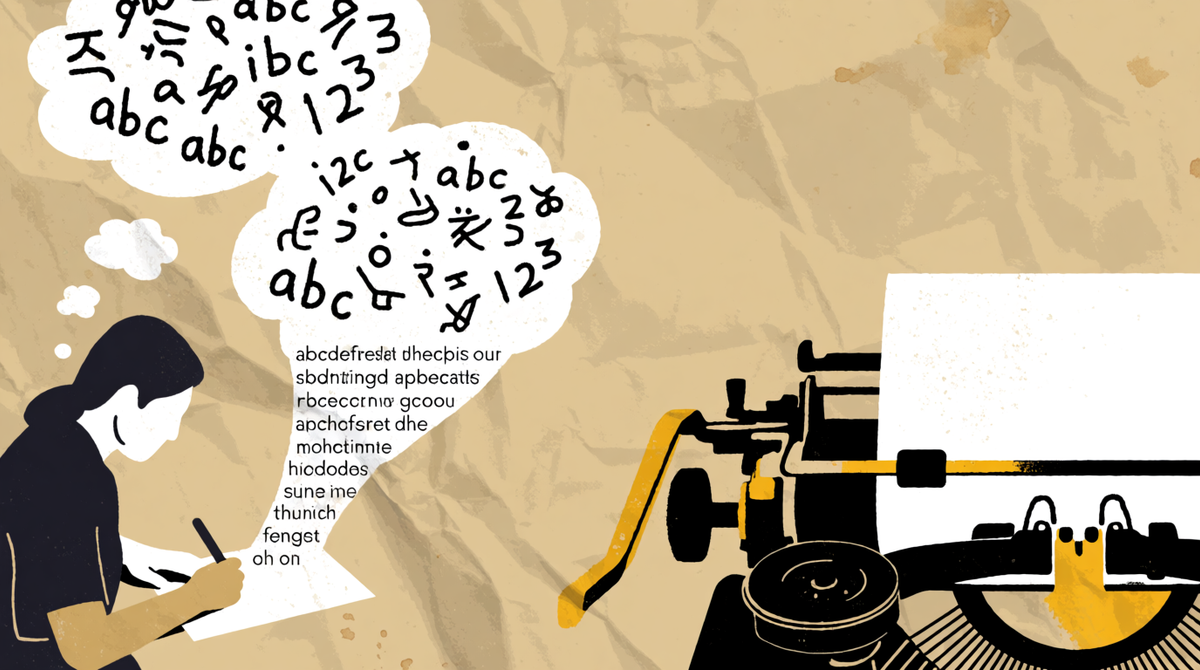
Every non-native writer hits the same wall. You know exactly what you want to say. Then you open a document, and the English comes out in a different order, with different words, and none of the jokes land. The instinct is to translate: draft the sentence in your first language, convert it, fix the grammar, and ship. That instinct is the whole problem.
This guide shows you how to stop translating in your head when you write in English, and why the fix matters far beyond fluency. The same habit that makes your writing read stiff also makes it read like AI. For non-native speakers the two failures are the same failure.
Why translated writing reads wrong
Your first language has its own grammar, its own word order, and its own set of assumptions about what sounds polite. When you translate phrase by phrase, you drag all of that across the border into English. The result is grammatically correct English that no native reader would ever produce.
Think about the phrases that usually slip through. Where your language puts the verb before the subject, English expects it after. Where your language leans on one long sentence, English breaks the thought in two. Each difference is small, but they compound over a paragraph, and the reader registers the whole thing as foreign, careful, and a little off.
The tell is uniformity. Translated writing tends to come out in even, medium-length sentences, all built the same way, all equally complete. Native writing mixes short punches with longer arcs. The even rhythm is what makes non-native text feel mechanical, and it is the same evenness that AI detectors key on.
The cost is bigger than an accent
Here is the part most fluency advice skips. Translated writing does not just sound foreign. It sounds machine-made. AI detectors measure statistical patterns like predictability and uniform sentence rhythm, and clean translated English is full of those patterns.
The numbers are stark. Independent testing across several AI detection tools found a false positive rate of 61.3 percent for essays written by non-native English speakers, against roughly 2.9 percent for native speakers. Separate detector research estimates false positives on human writing at between 4 and 15 percent depending on the tool, with non-native writers in the higher risk band.
So when a professor, a client, or a hiring manager runs your words through a detector because they doubt the origin, your careful translated English can look automatically generated. You are not being dishonest. You are being statistically unlucky.
Step 1: draft directly in English
The single highest impact change is to stop writing a draft in your first language and translating it. Write your first pass in English, badly if you have to. Bad direct English is far easier to fix than careful translated English, because the bad version at least moves in the right order.
Resist the urge to open the translator after every sentence. Draft in a burst, leave the grammar alone, and let the paragraph be rough. You are building a muscle where English words connect to meaning without a stopover. The grammar edit happens in a separate pass, with a separate mindset.
If you cannot draft in English yet, draft in a hybrid. Write the parts of the sentence you know in English, and leave a blank for the word you are missing. Fill the blanks after the draft. That keeps the structure English while you grow the vocabulary.
Step 2: name your world in English
Mental translation survives because your inner monologue still runs in your first language. When you see a chair, your brain reaches for the word in your native tongue and converts it. Break that by naming the objects around you directly in English, out loud or in your head.
Language teaching systems recommend starting with single word association. A chair is a chair, not your word translated into chair. Then build up from single nouns to describing your day. As you move through the morning, narrate it in English: now I am making coffee, now I am opening the laptop, now I am reading the email.
The daily narration is what rewires the habit. When you describe your own actions in English all day, the bridge from thought to English gets used so often it stops being a detour and becomes the main road. Within a few weeks you notice yourself reaching for English first.
Step 3: patch the three translation tells
Direct drafting gets you most of the way. The remaining distance is a handful of patterns that give translated writing away. Fixing these three covers the bulk of what readers notice.
Literal phrases. Some expressions in your language have a word for word English match that native speakers never use. Prefer the natural English phrase over the translated one.
Missing articles. In many languages there is no a or the. Building the habit of a for new things and the for things already known clears the single most common non-native signal.
Long openers. Translated writing loves formal openers like I hope this finds you well. Native English writing starts closer to the point.
Keep a running list of your own trouble phrases. Every time a reviewer or a tool flags one, add it. A short personal list beats a general grammar book, because it targets the exact bridges your first language keeps building into English.
Step 4: vary the rhythm
If your draft sounds even, break it up. Read it out loud and mark the sentences that all carry the same length and shape. Then rewrite a few of them: cut one long sentence into two, or merge two short ones into a single flowing thought. The goal is a mix.
Native writing alternates. A short, flat sentence lands hard because the longer sentence before it set up the contrast. Uniformity is what makes a reader suspect a machine, and rhythmic variety is the cheapest way to sound human. This overlaps with how you edit any AI sounding text you produce.
Step 5: protect yourself from the detector
Because clean translated English looks like AI output, your writing process should include a sanity check for your own work. Run important text through what you know about detector bias before you submit it, and treat a high AI score on non-native writing as a warning sign, not an accusation of dishonesty. If a detector flags you, the explanation matters: the tool is reporting a statistical resemblance, not proof.
The fuller picture of why non-native English trips detectors is worth reading as a companion to this guide.
When the fix you need is a revision pass, imperfectly treats editing as the path to a human-sounding voice instead of a mask. The point across every article here is the same: clarity beats camouflage, and your own voice is the asset.
The feedback loop that makes it stick
Language learning research is blunt about the mechanism: thinking directly in English comes from practice, not theory. Freewriting in English forces direct thought because you physically cannot write without stopping and translate at speed. Ten to twenty minutes a day of freewriting, narrating your day, and keeping a short English journal compounds faster than any grammar course.
The wider language facts make the case too. English has roughly 1.53 billion speakers, and non-native speakers outnumber native speakers by nearly three to one. Most of the people writing good English in the world are non-native. Clear English was never reserved for first language fluency, and the ones who sound most natural are often the ones who stopped mentally translating first.
What you need to know
Draft directly in English, even if the first pass is rough. Fix grammar after, not during.
Name objects and narrate your day in English to weaken the inner translator.
Patch the three big tells: literal phrases, missing articles, long openers.
Vary sentence rhythm so writing stops being uniform and mechanical.
Treat a high AI detection score on non-native writing as bias, not proof.
Stop translating is not about becoming native. It is about removing the relay that makes your writing both stiff and falsely machine flagged. The direct path is quicker than you think, and every sentence you draft without the stopover builds the road.
Frequently asked questions
Why does my English writing sound like AI?
Two habits overlap. Translated English tends to come out in even, predictable, medium length sentences, and that uniformity is exactly the statistical pattern AI detectors measure. Separate testing found a 61.3 percent false positive rate on non native essays versus about 2.9 percent for native writers.
How do I train my brain to stop translating when writing?
Draft directly in English and leave the grammar for a separate pass. Describe objects in English by name, narrate your day out loud, and freewrite for ten to twenty minutes daily. The narration habit uses the thought to English bridge so often that it becomes the main path.
What are the most common translation tells in non native writing?
Literal word for word phrases from your first language, missing articles a and the, and long formal openers like I hope this finds you well. Keep a personal list of your own recurring phrases and check your drafts against it.
Can AI detectors false flag my writing if English is my second language?
Yes. Independent testing across several tools reported a 61.3 percent false positive rate on non native English essays compared to roughly 2.9 percent on native ones. A high score is a statistical resemblance, not proof of AI use.
How long does it take to stop translating in my head?
With daily narration and freewriting you can notice small shifts within a few weeks and larger changes within a few months. Consistency matters more than intensity. Direct thought in English is a practice effect, not a talent.